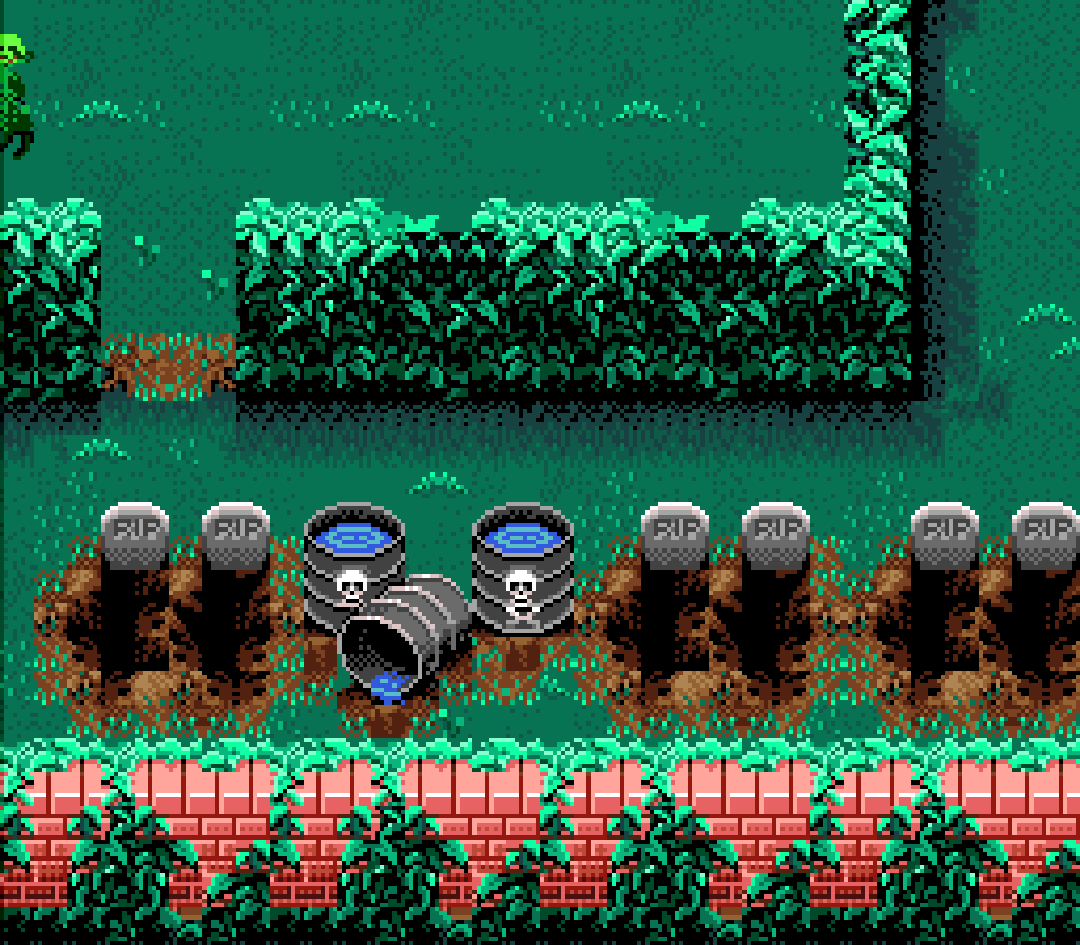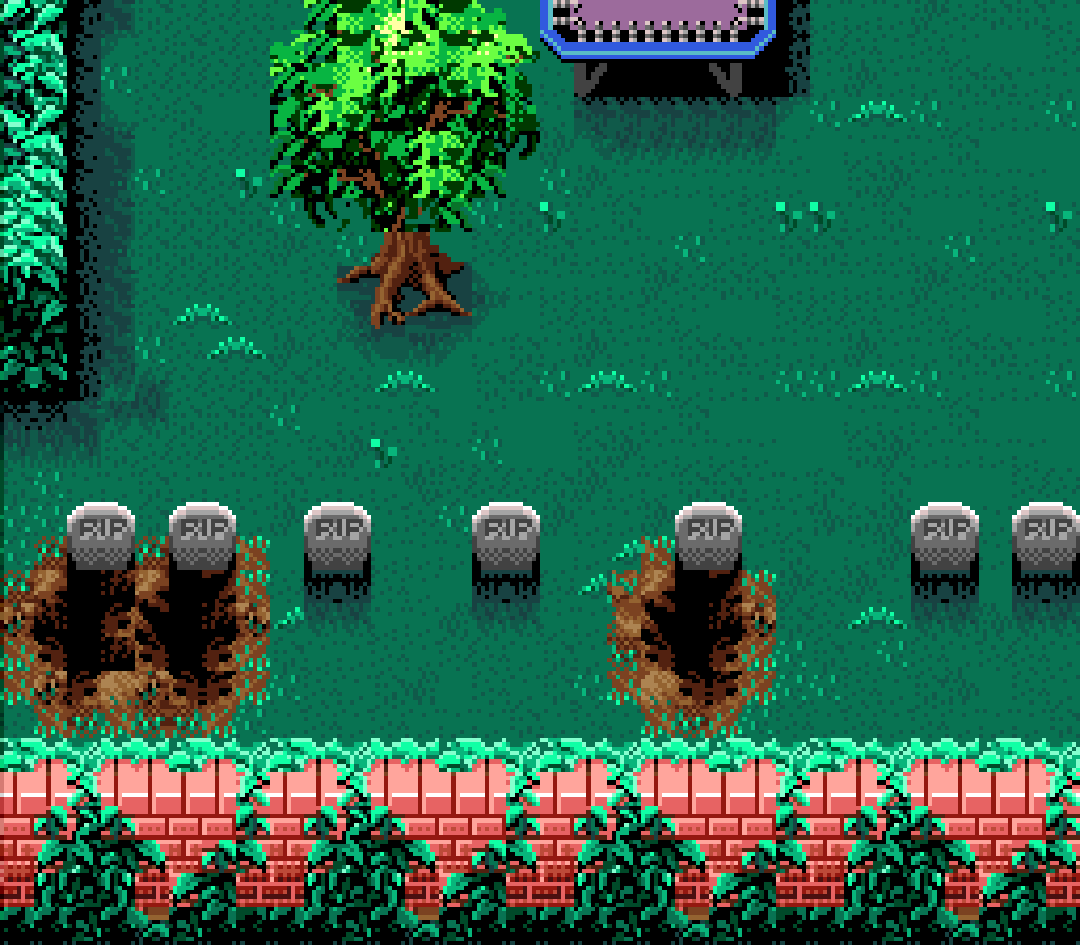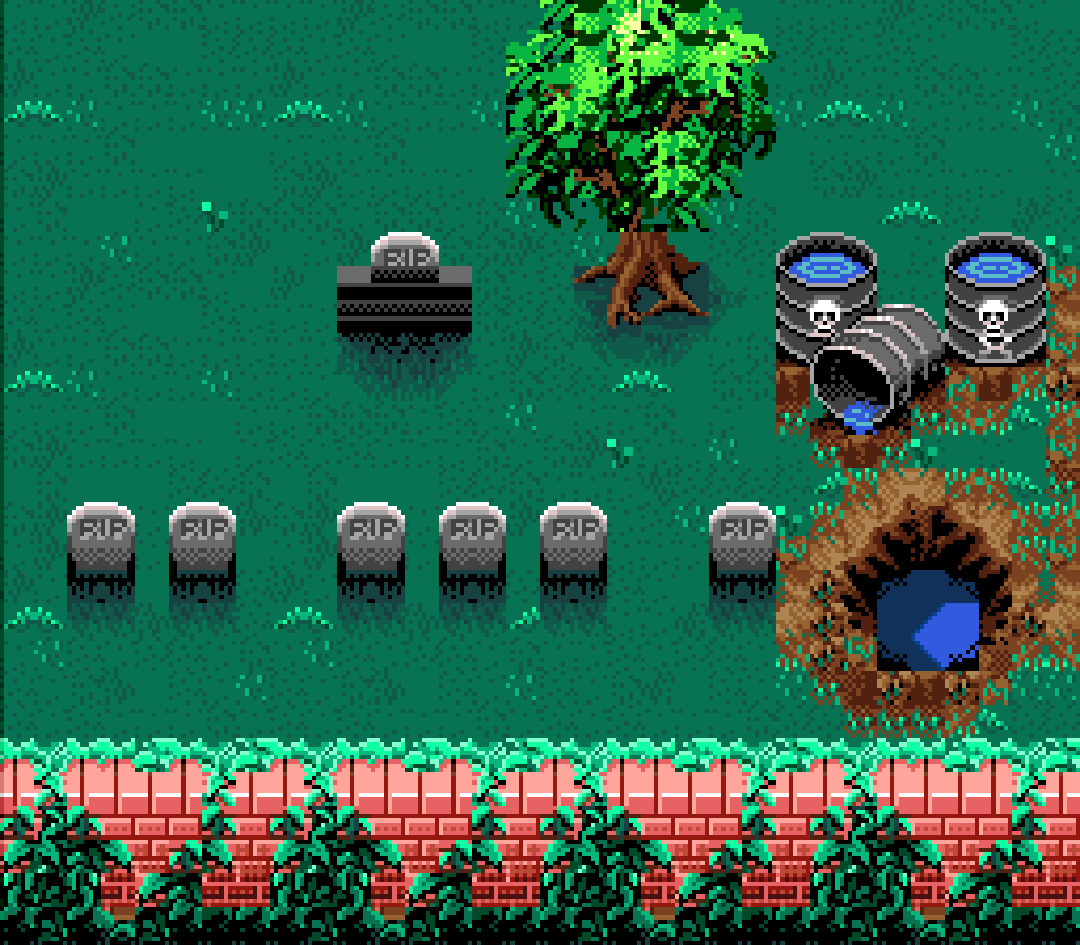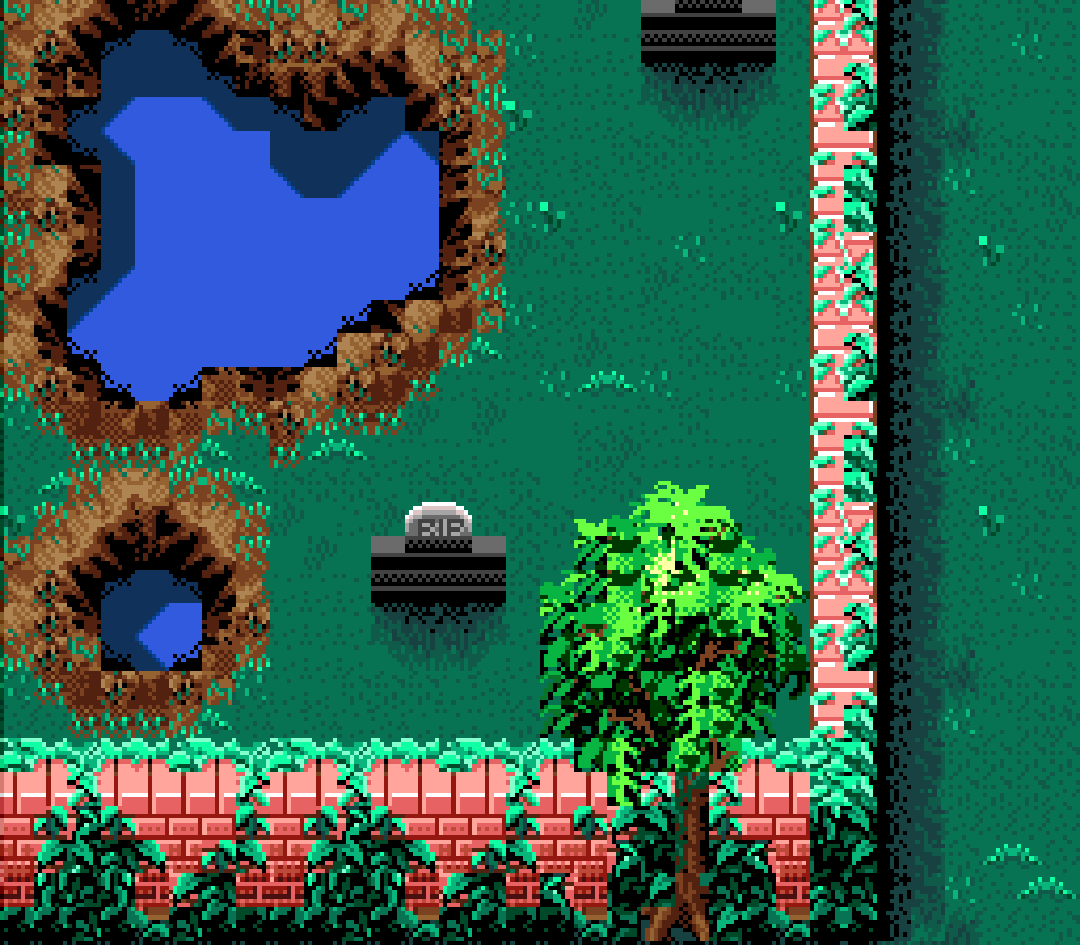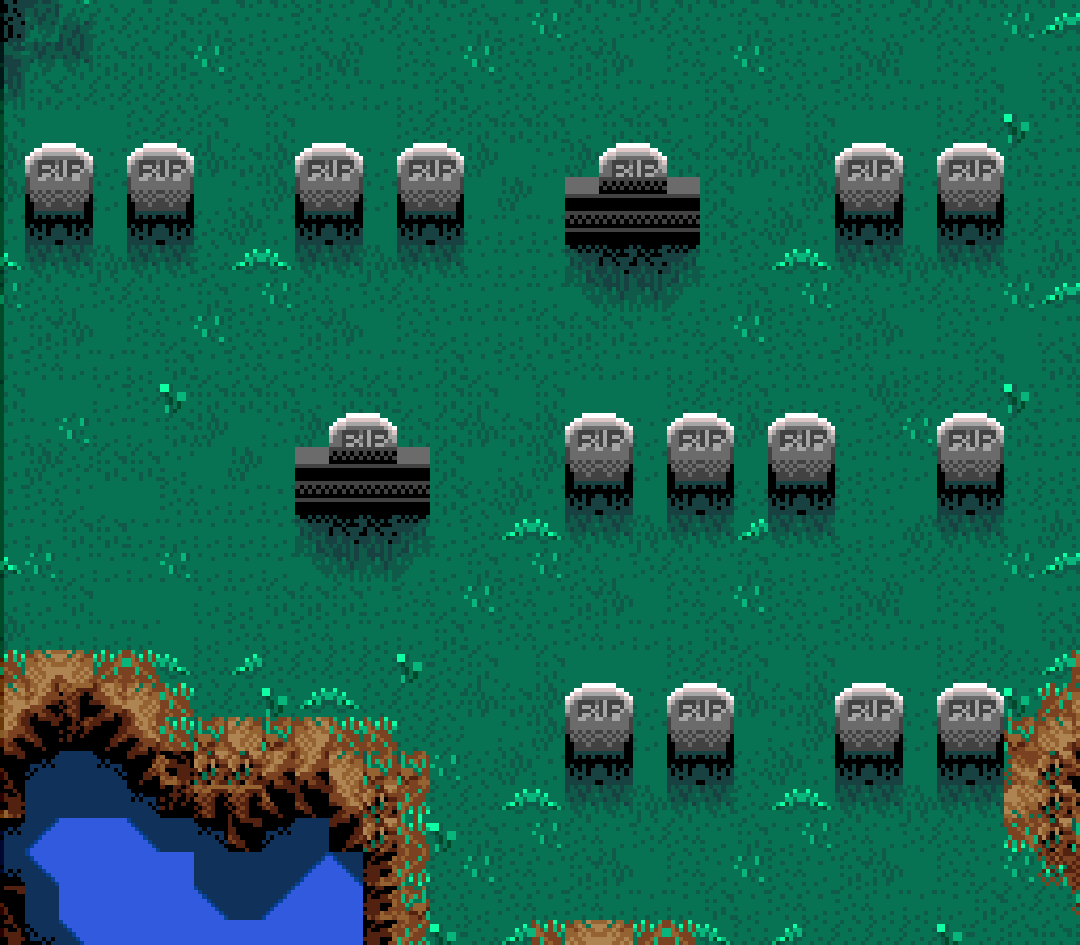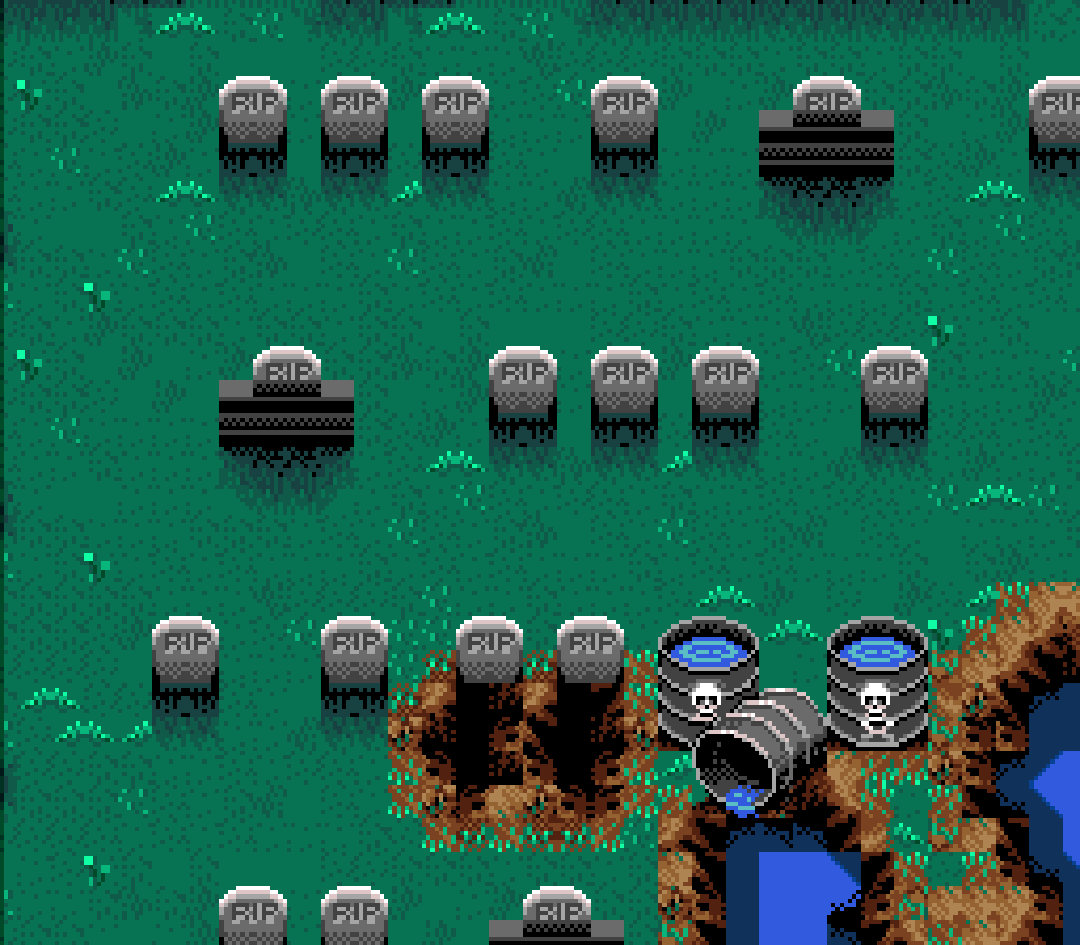

Graveyard at the southern end of stage 1





| Zombies Ate My Neighbors | |
|---|---|
| Game Information |
| Country of Origin | United States |
| Development Information | |
| Developer | LucasArts |
| Publisher | Konami |
| Designer | Mike Ebert |
| Programmer | Dean Sharpe |
| Artist | Collette Michaud Leonard Robel Sean Turner |
| Release Information | |
| Release Dates |
|
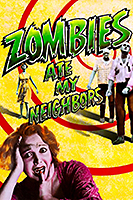
GAME INFO: Zombies Ate My Neighbors is a top-down shooter developed by offbeat game studio LucasArts featuring aesthetics that draw upon b-movies that were made between the 1960s and 1980s. Players control teenagers Zeke and Julie, who are tasked with rescuing their neighbors from unending hordes of zombies and other monsters that were created by a mad scientist named Dr. Tongue. When the players save as many of their neighbors as they can, the players can progress to the next level. Up to two people can play the game in simultaneous cooperation. The game was re-released by LucasArts Games on June 29, 2021 for Microsoft Windows, the Nintendo Switch, Sony Playstation 4, and Xbox One with no significant visual or gameplay updates.
SETTING: Although the game does not offer any identifiers that isolate an exact chronology or geographical location, its imagery suggests that the game takes place in what appears to be a fictionalized version of a United States suburb, beginning in a cemetery and moving to mundane areas such as domiciles, grocery stores, gas stations, and factories. Additionally, players enter levels that evoke familiar horror environments including crypts, pyramids, ruins, an active volcano, and an office building staffed by skeletons.
FUNERARY IMAGERY: The first level takes place in a cemetery whose bottom half is populated by upright headstones, all of which are feature the epitaph "RIP" (rest in peace). Most of the headstones are capsule-shaped stones that resemble those used in contemporary cemeteries, but several headstones are on a plinth further resembling styles of gravestones that became popular in the twentieth century United States. Barrels of toxic waste are interspersed between the headstones and surrounding a small pond at the south-east corner of the map, implying that the zombies that appear throughout the level are made artificially by proxy to artificial substances.
ANALYSIS: The inclusion of post-modern headstones in the very first level of the game serves not only to reinforce its horror aesthetic, but also hearkens to the narrative of the zombie film The Return of the Living Dead (1985), wherein the mass resurrection of corpses is caused by a toxic gas called Trioxin that spreads throughout a small town after a medical supply worker inadvertently releases the gas by slapping a container holding an animate corpse suspended within the vapor. Since this game features a litany of horror movie references reaching as far back as the Universal monster movies of the 1930s, the inclusion of a clear reference to one of the most revered zombie movies of the 1980s demonstrates a heightened awareness of the genre on the part of the game's artists and designer.