
Cinematic introducing stage three





| The Simpsons | |
|---|---|
| Game Information |
| Country of Origin | Japan |
| Development Information | |
| Developer | Konami |
| Director | Kengo Nakamura |
| Producer | S. Kido |
| Artist | Kengo Nakamura Yasushi Takano K. Nakajima Noriyuki Yokoki Hiroshi Iuchi |
| Release Information | |
| Release Dates |
|
GAME INFO: The Simpsons Arcade Game is a side-scrolling beat-em-up arcade game released towards the end of the television series' second season. Up to four players can take control of a single member of the Simpsons family each (Marge, Homer, Bart, and Lisa) in cooperative gameplay. This is generally considered to be one of the finest games based on the series despite never officially being ported to any of the popular home consoles of the era.
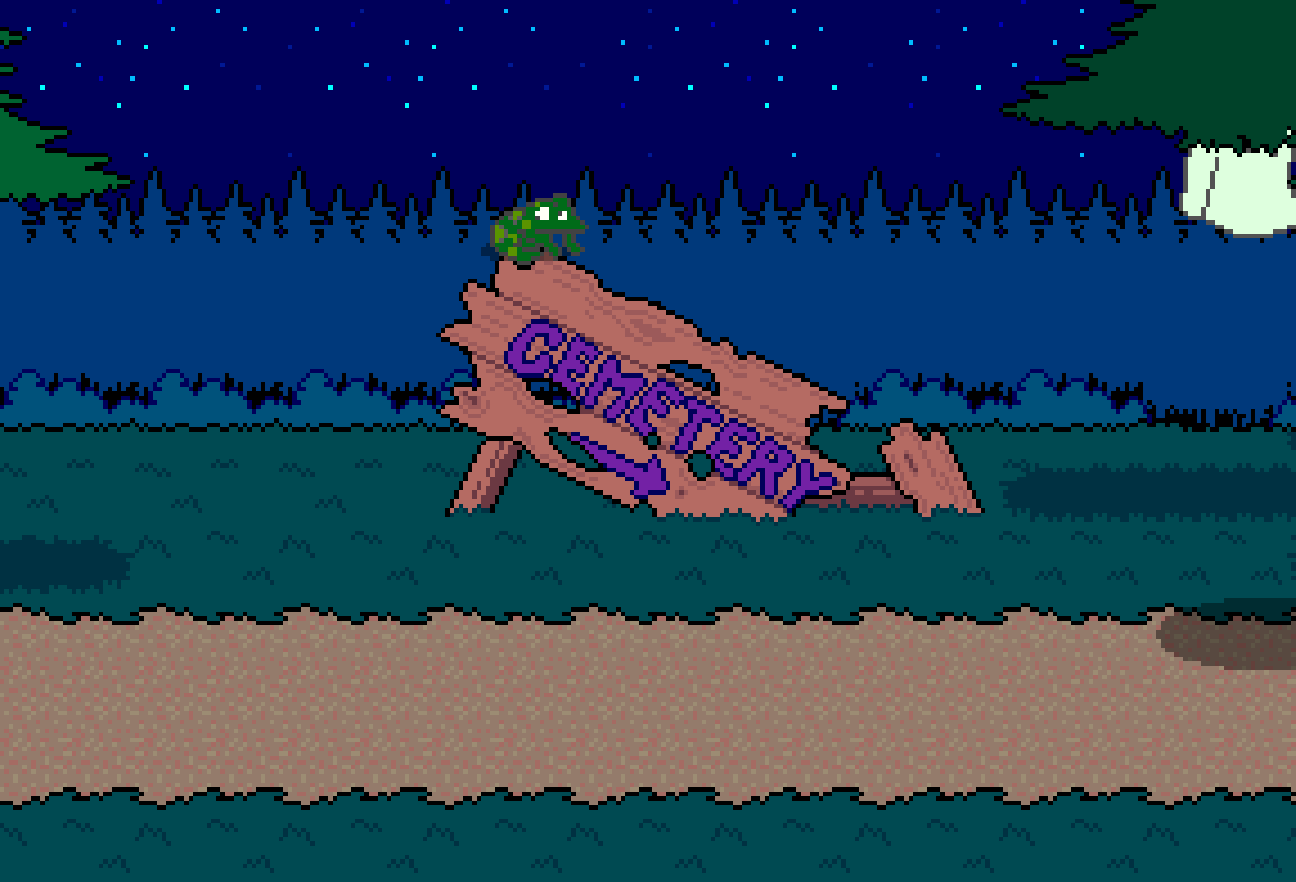
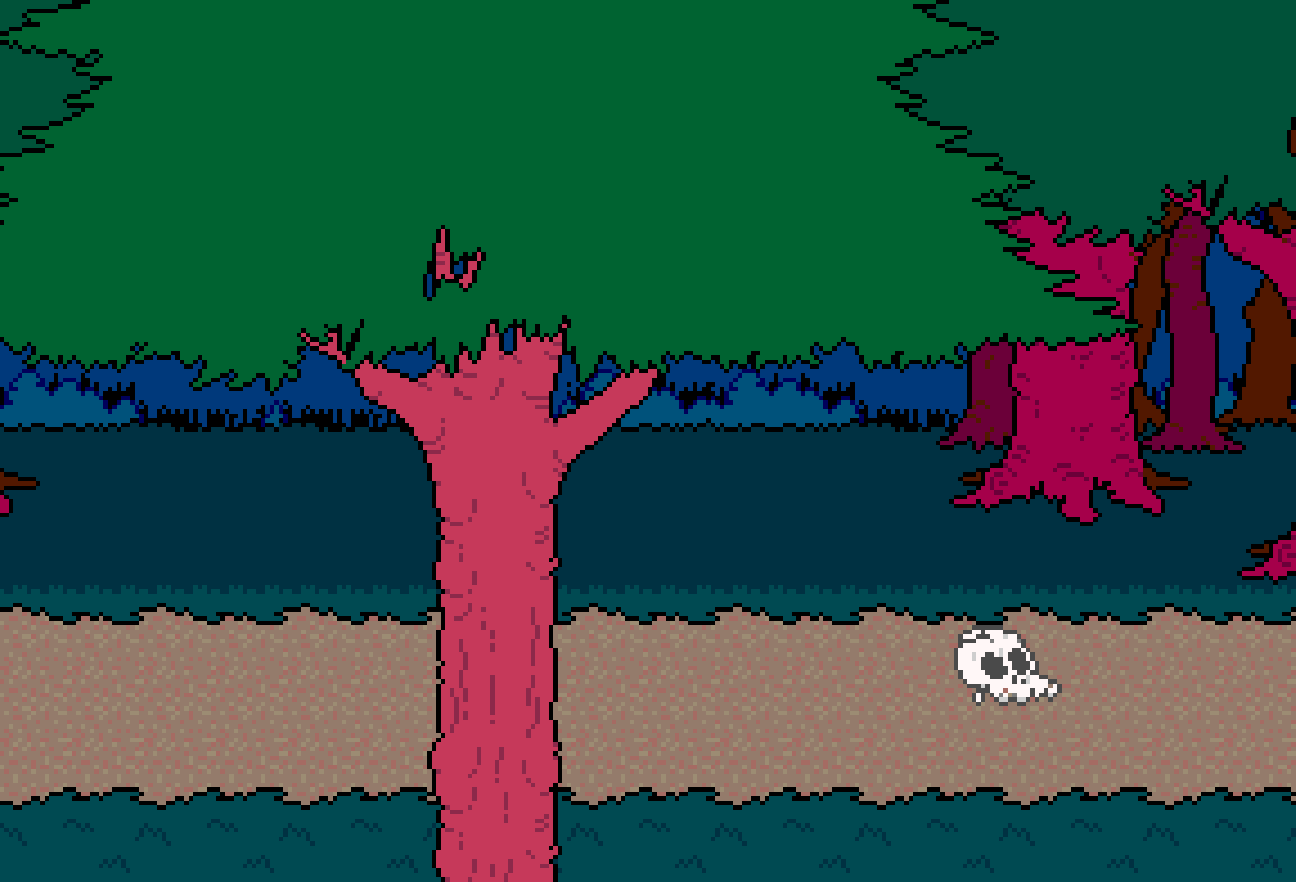
SETTING: The game takes place in the fictional city of Springfield wherein the titular family is shopping in Downtown when a hyper-villainized Waylon Smithers crashes into them after successfully robbing a jewelry store. Amidst the commotion, the stolen diamond falls into Maggie Simpson's mouth, which she uses as a pacifier. Smithers absconds with Maggie, prompting the Simpsons to pursue him in an effort to rescue Maggie. Players travel to familiar locations from the television show such as Krustyland, Moe's Tavern, Springfield National Forest, and the Springfield Nuclear Plant. In stage three they traverse Springfield Discount Cemetery, which proves to be plagued by dancing zombies and hired goons masquerading as ghosts.
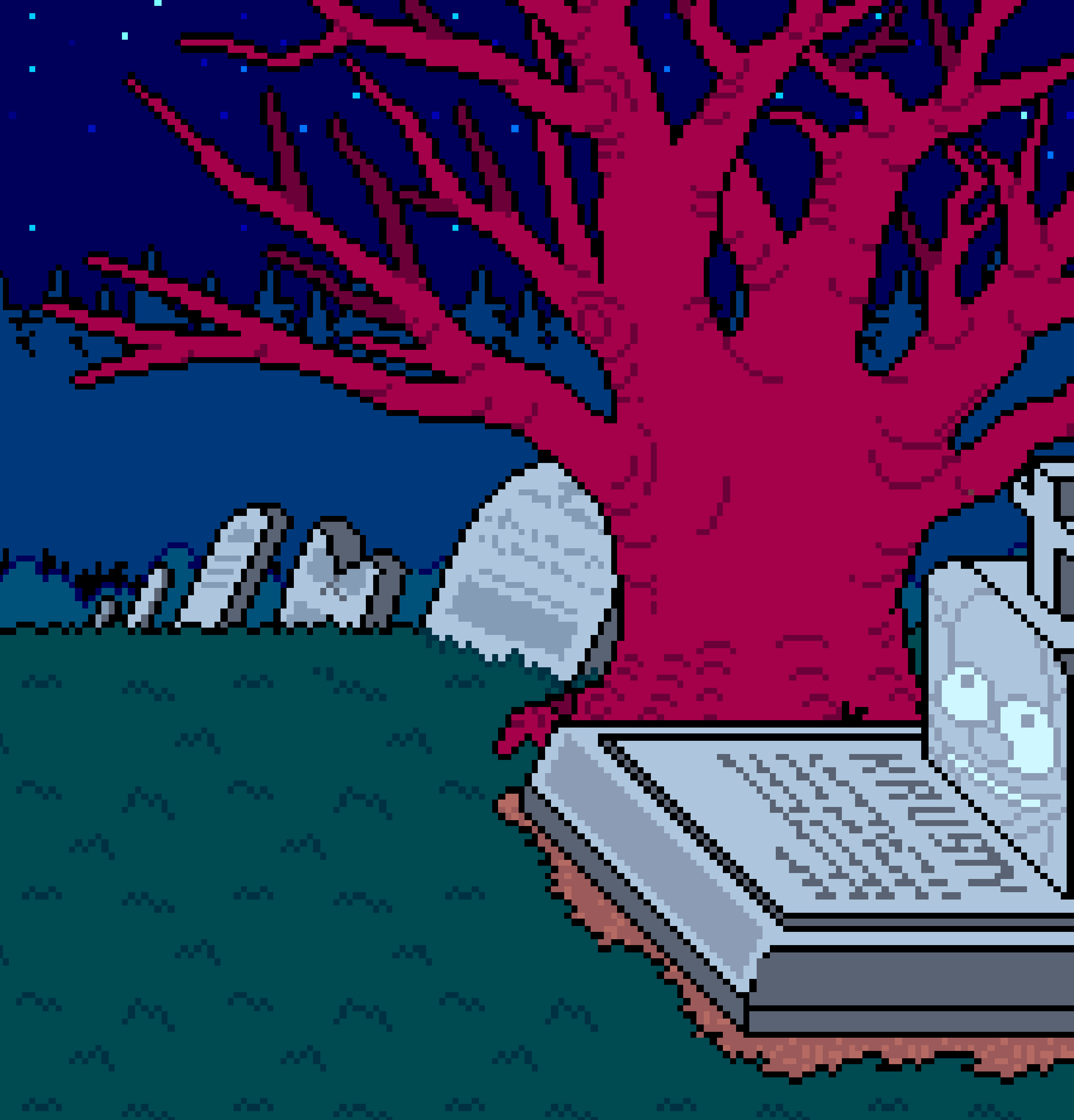
FUNERARY IMAGERY: Springfield Discount Cemetery resembles not only a modern cemetery but also cites the series' Halloween episodes that open with cartoon headstones featuring witty wordplay for the show's cast and crew. As such, the cemetery is populated with familiar upright headstones along with horizontal ground markers, a crucifix upon a plinth, and a large tombstone for Krusty the Clown beneath a large, dead tree at the very end of the stage. Krusty's tombstone bears elements of all three types of gravestone seen within the level, bearing an upright headstone engraved with Krusty's visage topped with a crucifix, all of which rests upon a large ground marker inscribed with Krusty's epitaph. The tomb's horizontal surface area has a deceptive yet practical use as it slides open to reveal a deep pit into which the Simpson family plummet when illusory ghosts frighten them.
ANALYSIS: As previously stated, The Simpsons had established its reknown Halloween episodes by season two, and gravestones feature as one of the most familiar and enduring elements of this tradition. Hence, the inclusion of a cemetery stage in the arcade game is an obvious way to reinforce familiarity despite any necessary or unexpected changes that occurred in the transition from a slice-of-life television series into a combat heavy beat-em-up arcade game. For instance, Smithers and Mister Burns change from amoral but otherwise mundane characters in the television show into a crazed, cape-wearing criminal and a robot-piloting megalomaniac respectively are sufficient to provide identifiable villains using characters that are generally at odds with the Simpson family. The environment of Springfield Discount Cemetery is no different, as it is exagerrated in such a way that its sheet-wearing goons and awkwardly dancing zombies provide enemies for players to fight despite never appearing in the same context within the television series. Moreover, the dancing zombies tacitly reference Michael Jackson's iconic music video for Thriller, which itself became a noteworthy cemetery stage in the Sega Genesis and arcade versions of Michael Jackson's Moonwalker. This comingling of familiar imagery is a perfect example of intermediality, which is when several different forms of media converge. Essentially, the dancing zombies that Michael Jackson made famous in a music video for his song work their way into The Simpsons via a completely unrelated video game that is based on an equally unrelated television series and thus relate to Michael Jackson's work without explicitly saying so. The resulting familiarity depends upon a certain shared cultural knowledge that would have been easily recognizable in the early 1990s. Ultimately, even without that shared cultural understanding of pop-culture iconography, The Simpsons Arcade Game was a prevalent staple of arcades throughout the 1990s, and would have established another sense of familiarity with a generation of video game enthusiasts who would not be surprised to see a graveyard in any given video game regardless of its theme or context.