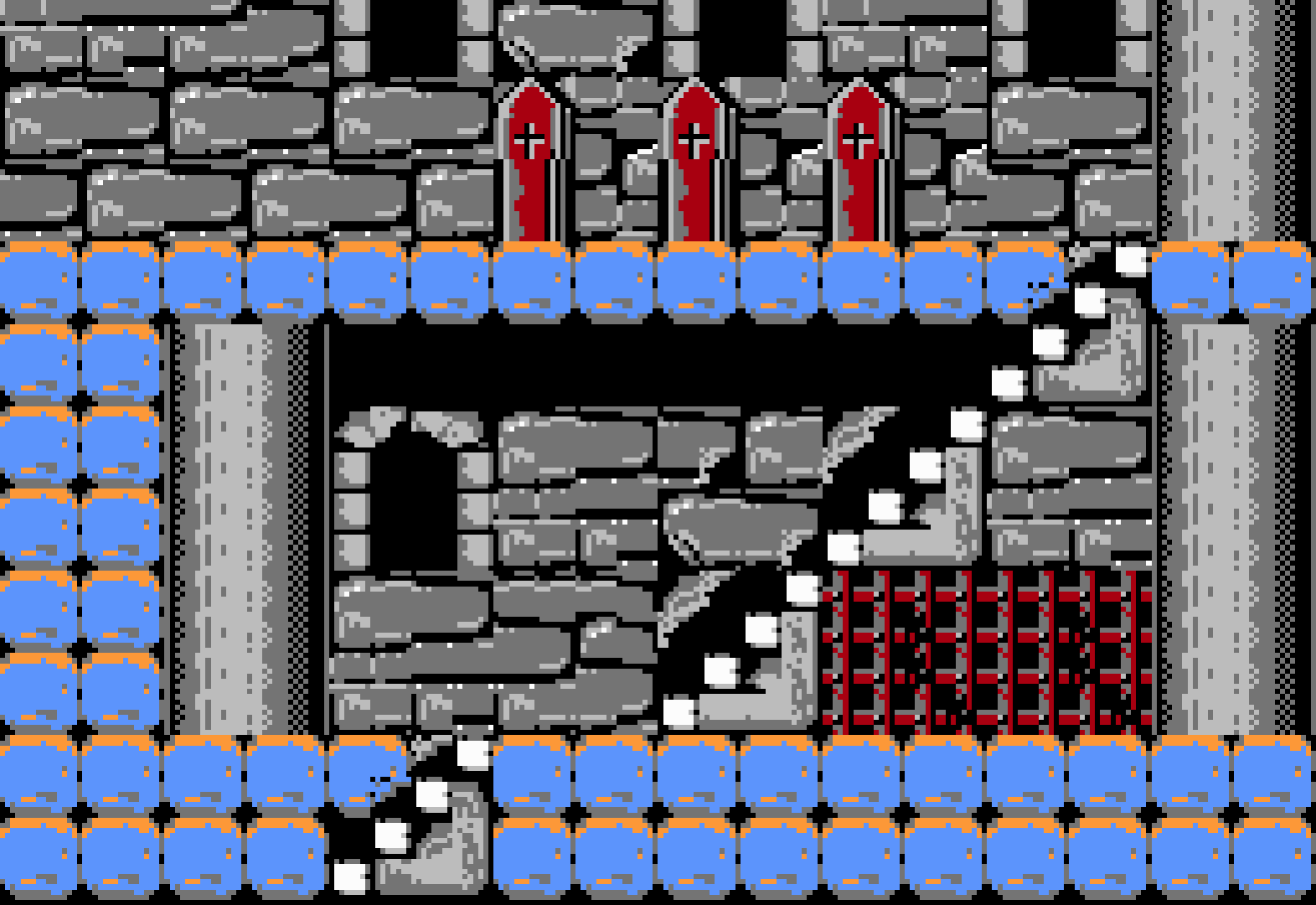
Coffins found in stage 5





| Castlevania | |
|---|---|
| Game Information |
| Country of Origin | Japan |
| Original Title | 悪魔城ドラキュラ (Akumajō Dorakyura) | Translated Title | Demon Castle Dracula |
| Development Information | |
| Developer | Konami |
| Director | Hitoshi Akamatsu |
| Producer/Designer | Akihiko Nagata |
| Artist | Noriyasu Togakushi |
| Release Information | |
| Platforms |
|
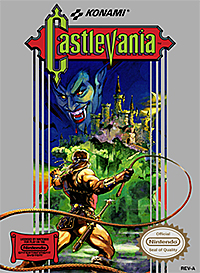
GAME INFO: Castlevania is a side-scrolling platformer featuring the vampire hunter Simon Belmont, who enters Dracula's castle in 1691 CE to destroy Dracula following a generational tradition among the Belmont family. Throughout the series, Dracula is resurrected roughly once every century, thus warranting the current living Belmont to slay the semi-immortal vampire whenever no one else is suited to the task. Being the first of the series, Castlevania has an implied narrative told through environment and the game's instruction manual, but maintains a palpable gothic atmosphere that persisted in subsequent games. Castlevania was also marketed under the name Vampire Killer for the MSX2 home computer, where the gameplay, visuals, and music remained mostly the game except for the inclusion of exploratory elements that would grow to characterize the series after the release of Castlevania: Symphony of the Night in 1997.
SETTING: The game takes place in a fictionalized version of Transylvania in the seventeenth century. This game takes place entirely upon the grounds of Dracula's castle, beginning at the entry gates and ending in the vampire lord's private chambers at the top of the castle. The player is expected to travel a linear path through ruined architecture, subterannean passages, and an area resembling a mad scientist's laboratory, battling numerous undead and monstrous creatures derived from horror films, folklore, and Classical mythology.
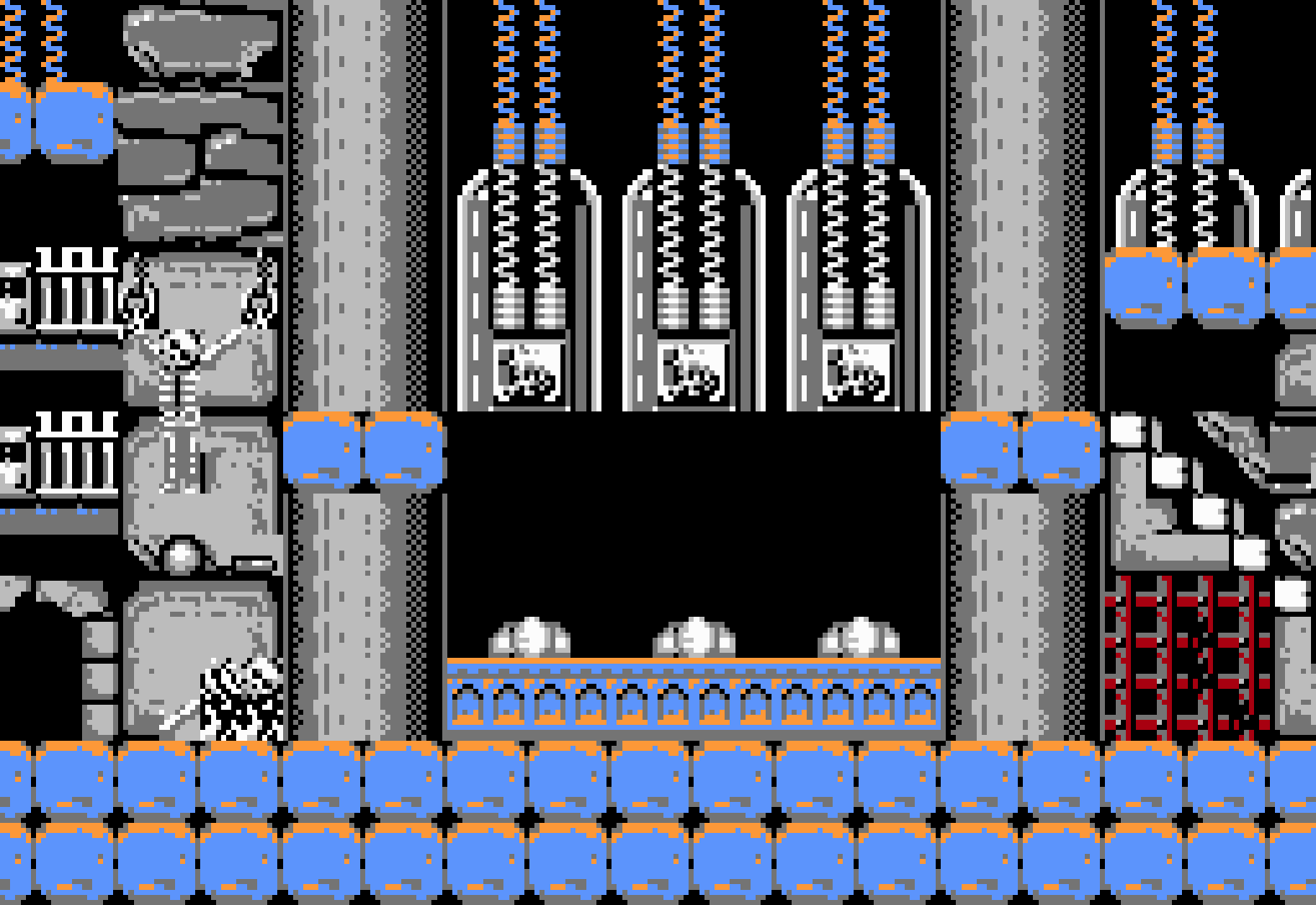
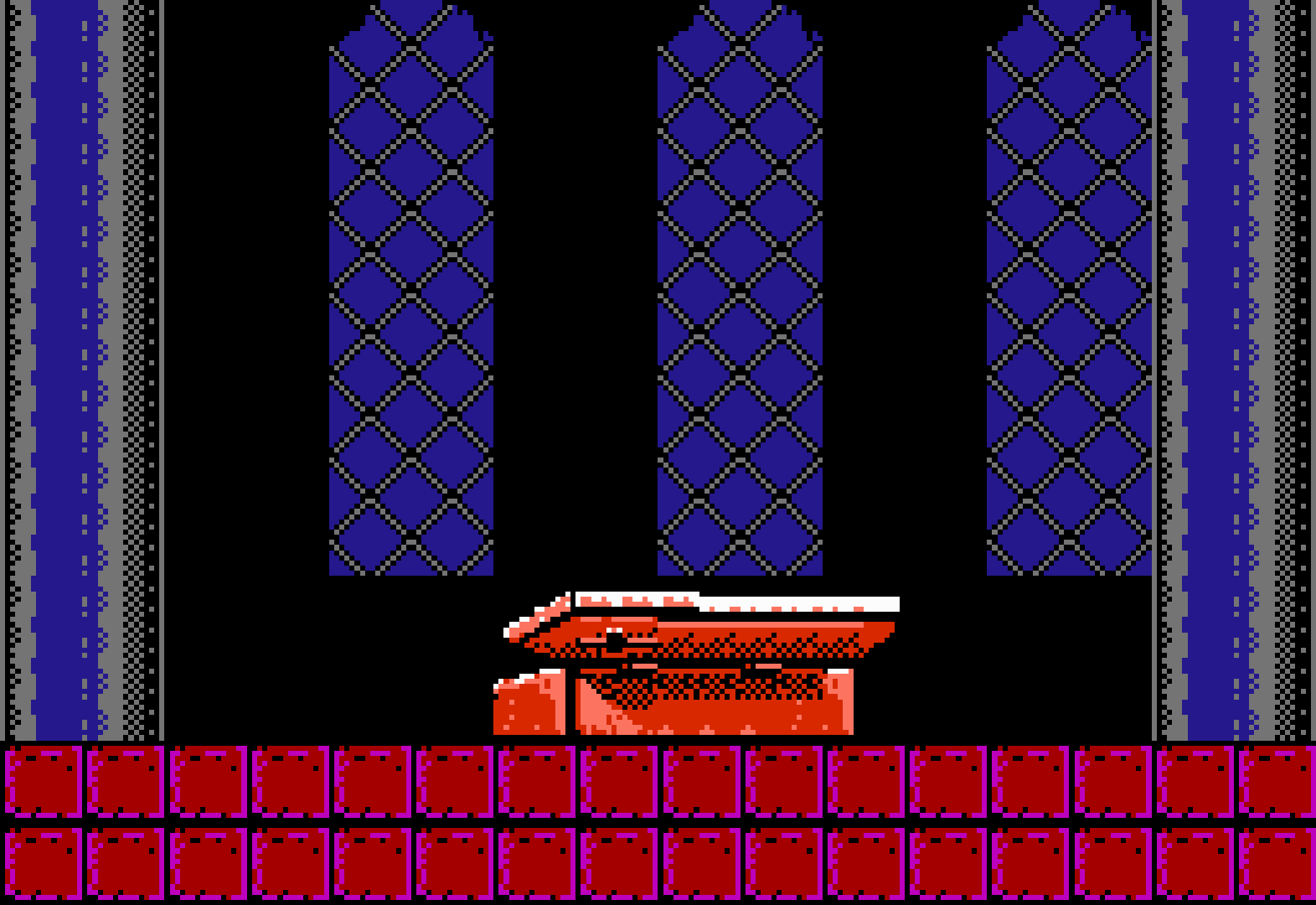
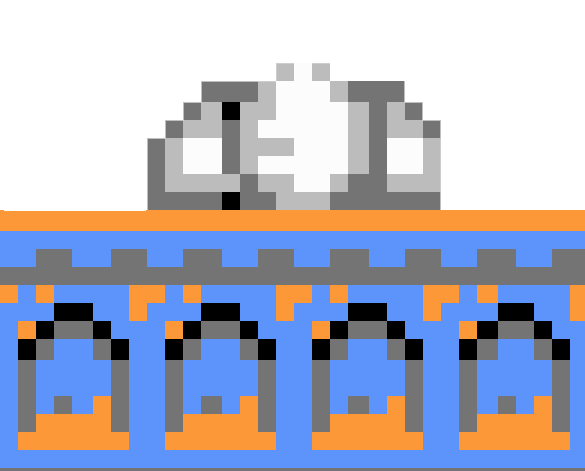
FUNERARY IMAGERY: Although the series would become associate with graveyards, this game has no such environment for the player to traverse. The only funerary imagery present is in the laboratory in stage seven, which has several coffins and effigy tombs in the background, and the final battle with Dracula who rises from an enormous coffin in his chambers.
ANALYSIS: For a series so closely associated with horror and the grave, the first Castlevania entry to be released on home console has no proper graveyard or crypt. The only funerary aesthetics are found late in the game, and have been removed from their intended contexts of the crypt to be placed in a laboratory. Instead, the enemies that assault the player provide much of the horror content, particularly in the form of animated skeletons that hurl their own bones as projectile weapons. Moreover, an enormous skeleton in the form of the Grim Reaper provides an especially difficult boss battle that prefaces the final confrontation with Dracula. Castlevania also benefits from a distinctly gothic aesthetic evoked by ruined architecture, which seem to be influenced in equal parts by Hammer horror films of the 1950s and gothic novels of the 1700s and 1800s. Of course, Dracula by Bram Stoker is a clear influence, but aspects of Frankenstein by Mary Shelley appear throughout, particularly in the laboratory that evokes the bodysnatching in the source material by creating visual links to the grave. Despite having little in the way of funerary imagery throughout its environments, Castlevania earns its place as the pre-eminent gothic horror video game of the 1980s through its aesthetics of ruin, horrific foes, and serious tone.